Sodium in Hawker Food: How Much Is in Each Singapore Dish
According to HPB Singapore data, a 622 g bowl of mee soto has 4,068 mg sodium and a 604 g bowl of laksa has 3,086 mg, each more than the 2,000 mg daily limit that HPB recommends.
Figures checked against the Health Promotion Board (HPB) Singapore food database on 24 October 2026. Each figure is HPB's per-100 g value x HPB's portion weight x HPB's edible portion.
HPB Singapore's food database lists sodium for most hawker dishes. This guide shows HPB's sodium figure for each dish, with its portion in grams and its share of the 2,000 mg daily limit.
One 604 g bowl of laksa has 3,086 mg sodium, 154% of the 2,000 mg daily limit. In HPB's data, a 732 g bowl of prawn noodle soup (3,378 mg) and a 465 g plate of mee goreng (3,050 mg) are each above the daily limit on their own.
How Much Sodium Do Singaporeans Eat?
These figures come from the Health Promotion Board (HPB). The first two are from the National Nutrition Survey 2022:
“9 in 10 Singapore residents exceed the daily recommended sodium intake.” Source: HPB
“Singapore residents consume 3,620 mg of sodium a day on average, almost double the World Health Organisation's recommended daily intake of less than 2,000 mg (equivalent to 1 teaspoon of salt).” Source: HPB
HPB also says: “A key source of sodium intake is salt, sauces and seasonings added during cooking, largely from meals eaten outside the home. On average, the sodium levels in dishes have increased by 22% between 2010 and 2023.” Source: HPB
That is the daily picture. The dish figures below are per bowl or plate, and a single bowl of Laksa can use up more than a whole day's recommended limit on its own.
What HPB says about sodium
HPB says high sodium consumption is a key risk factor for hypertension, which in turn increases the risk of heart disease and stroke. Source: HPB
The table below lists HPB's sodium figure for each dish, highest first.
High-Sodium Everyday Dishes — HPB Sodium Data
| Dish | Portion | Sodium | % of 2,000 mg |
|---|---|---|---|
| Prawn Noodle Soup | 732 g bowl | 3,378 mg | 169% |
| Laksa, full bowl | 604 g bowl | 3,086 mg | 154% |
| Mee Goreng | 465 g plate | 3,050 mg | 153% |
| Wonton Noodle Soup | 678 g bowl | 2,895 mg | 145% |
| Char Kway Teow | 480 g plate | 2,107 mg | 105% |
| Bak Kut Teh, per bowl | 574 g bowl | 1,788 mg | 89% |
| Bak Chor Mee, dry | 430 g bowl | 1,621 mg | 81% |
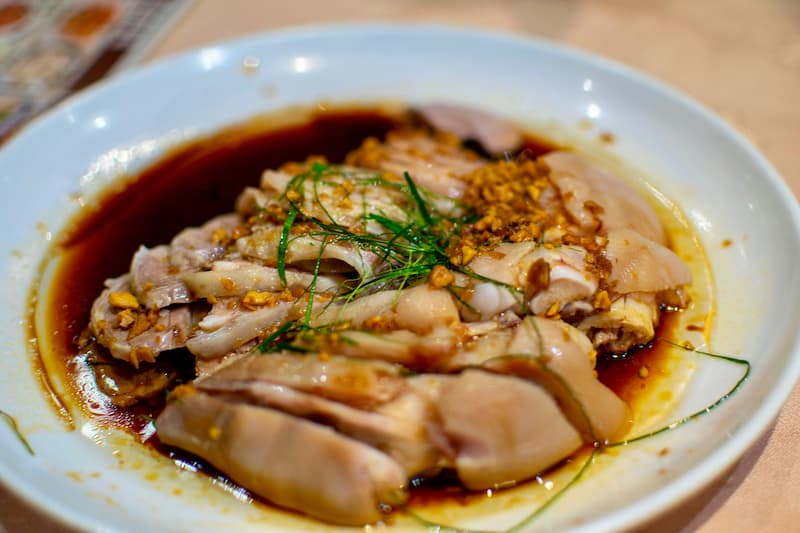
| Chicken Rice, steamed | 346 g plate | 1,227 mg | 61% |
Note: This table lists the everyday dishes covered in this guide. HPB's database lists some dishes higher still, such as Mee Soto (622 g, 4,068 mg) and Mee Siam (731 g, 3,754 mg). HPB doesn't define a "full pot" portion for Bak Kut Teh — the 1,788 mg figure above is HPB's standard 574 g bowl serving. Bak Chor Mee here refers to the dry version; HPB lists the soup version at 2,135 mg (682 g). Chicken Rice here is the steamed version; roasted chicken rice (363 g) is 1,061 mg and soya sauce chicken rice (310 g) is 605 mg.
A Closer Look at Three Dishes
HPB lists prawn noodle soup at 3,378 mg sodium for a 732 g bowl, which is 169% of the 2,000 mg daily limit. The broth is made from prawn heads and shells.
HPB lists char kway teow at 2,107 mg sodium for a 480 g plate, which is 105% of the 2,000 mg daily limit. It is fried with dark soy sauce, light soy sauce and oyster sauce.
HPB lists bak kut teh (soup) at 1,788 mg sodium for a 574 g bowl, which is 89% of the 2,000 mg daily limit, and dry bak kut teh at 2,171 mg for a 282 g serving. HPB has no figure for a shared or refilled pot.
Dishes with less sodium in HPB's data
Dishes side by side
| Dish | Portion | Sodium | Another HPB dish | Portion | Sodium |
|---|---|---|---|---|---|
| Laksa | 604 g | 3,086 mg | Sliced fish beehoon soup (with milk) | 600 g | 1,410 mg |
| Char Kway Teow | 480 g | 2,107 mg | Beef ball kway teow soup | 550 g | 1,496 mg |
| Prawn Noodle Soup | 732 g | 3,378 mg | Prawn noodles, dry | 396 g | 1,321 mg |
| Mee Goreng | 465 g | 3,050 mg | Fried mee siam (the dry fried noodle, not mee siam in gravy) | 343 g | 1,837 mg |
| Wonton Noodle Soup | 678 g | 2,895 mg | Wanton noodles, dry | 388 g | 1,564 mg |
Serving sizes differ between the dishes; the grams are shown so you can compare.
Soup and dry: per HPB, a bowl of wanton noodles (soup) is 678 g and has 2,895 mg of sodium, while the dry version is a 388 g bowl at 1,564 mg, for 644 kcal and 625 kcal respectively. HPB lists yong tau foo in clear soup (7 pieces, mixed) at 2,768 mg for a 771 g bowl.
The Sodium You're Drinking
Drinks are a small part of the sodium picture compared with the dishes above, and HPB reports sodium for only some of them. Our kopitiam drinks calorie guide covers the calories for common kopitiam drinks.
| Drink | Portion | Sodium | Notes |
|---|---|---|---|
| Milo, regular cup | 250 g | HPB lists none | HPB lists no sodium figure for this drink |
| Bandung, regular cup | 400 g | HPB lists none | HPB lists no sodium figure for this drink |
| Teh Tarik, small cup | 150 g | 32 mg | HPB's default cup |
| Fresh sugarcane juice, medium cup | 550 g | HPB lists none | HPB lists no sodium figure for this drink |
| Kopi O kosong, regular cup | 250 g | HPB lists none | HPB lists no sodium figure for this drink |
| Plain water, glass | 250 g | 0 mg | HPB lists water at 0 mg for 250 g |
Note: HPB's food composition database lists no sodium value for several of these drinks, so none is shown for them.
What the HPB figures show
Soup and dry. Wanton noodles (soup) are 2,895 mg for a 678 g bowl and wanton noodles (dry) are 1,564 mg for a 388 g bowl. On our soup noodles page, all 7 dry bowls have less sodium than their soup versions.
Sauces. HPB says: “A key source of sodium intake is salt, sauces and seasonings added during cooking, largely from meals eaten outside the home.” Source: HPB
Lower in HPB's data. Soya sauce chicken rice (310 g, 605 mg) and roasted chicken rice (363 g, 1,061 mg).
Tracking. NutriKaki shows the sodium for each hawker dish you log, from HPB Singapore data.
📖 Related: Hawker dishes under 400 kcal →
NutriKaki tracks your daily sodium alongside calories, protein, and fat — with HPB Singapore data for hawker dishes.
Log your hawker meals in grams on NutriKaki →Frequently Asked Questions
Which hawker food is highest in sodium in Singapore?
HPB lists many dishes above 3,000 mg for one serving, including Mee Soto (622 g, 4,068 mg), Mee Siam (731 g, 3,754 mg), Prawn Noodle Soup (732 g, 3,378 mg), Laksa (604 g, 3,086 mg) and Mee Goreng (465 g, 3,050 mg) — each on its own more than the full 2,000 mg daily recommended limit. Char Kway Teow (480 g, 2,107 mg) also exceeds the daily limit on its own. Bak Kut Teh, at 1,788 mg for a 574 g bowl, sits below all of these.
What is the daily sodium limit recommended for Singaporeans?
The World Health Organisation recommends less than 2,000 mg of sodium per day for adults. Singapore's HPB recommends the same limit. A single bowl of several popular hawker dishes can exceed this limit on its own, based on HPB data.
How much sodium do Singaporeans eat each day?
According to the Health Promotion Board (HPB), the National Nutrition Survey 2022 found that 9 in 10 Singapore residents exceed the daily recommended sodium intake. Singapore residents consume 3,620 mg of sodium a day on average, almost double the World Health Organisation's recommended daily intake of less than 2,000 mg (equivalent to 1 teaspoon of salt). Source: HPB
How much sodium is in chicken rice?
A steamed chicken rice plate (346 g) has 1,227 mg of sodium, which is 61% of the 2,000 mg daily limit. Roasted chicken rice (363 g) has 1,061 mg (53%) and soya sauce chicken rice (310 g) has 605 mg (30%).
Does the soup or dry version have more sodium?
In HPB's data, wanton noodles (soup) have 2,895 mg sodium for a 678 g bowl and wanton noodles (dry) have 1,564 mg for a 388 g bowl. Prawn noodles are 3,378 mg for a 732 g soup bowl and 1,321 mg for a 396 g dry bowl.
How does NutriKaki track sodium?
NutriKaki uses the HPB Singapore food composition database — the Health Promotion Board's own dataset — to show the sodium content of your specific hawker dishes, including portion sizes. Your daily sodium total is tracked alongside calories, protein, and fat.
Nutrition data sourced from the Health Promotion Board (HPB) Singapore food composition database. Values vary by stall, recipe, and portion size. This article is for general information only and is not medical or dietary advice. If you have hypertension or a kidney condition, please consult a registered dietitian or doctor for personalised guidance. Nutrition data referenced in this article is used under licence from the Health Promotion Board (HPB) of Singapore and may not be redistributed, republished, or reused commercially without NutriKaki's prior written permission.